The History of the Legion | Beyond the Battlefield
For more than a century, The American Legion has stood as the nation's largest veterans service organization, advocating for those who served while strengthening communities across America. Although many people recognize The American Legion through local posts, parades, or community events, its influence reaches far beyond the walls of a meeting hall.
From helping create the GI Bill to championing veterans' benefits and mentoring future generations, the organization's history is one of service that never ended when the uniform came off.
Born from the Challenges of Coming Home
The story of The American Legion began not on American soil, but overseas.
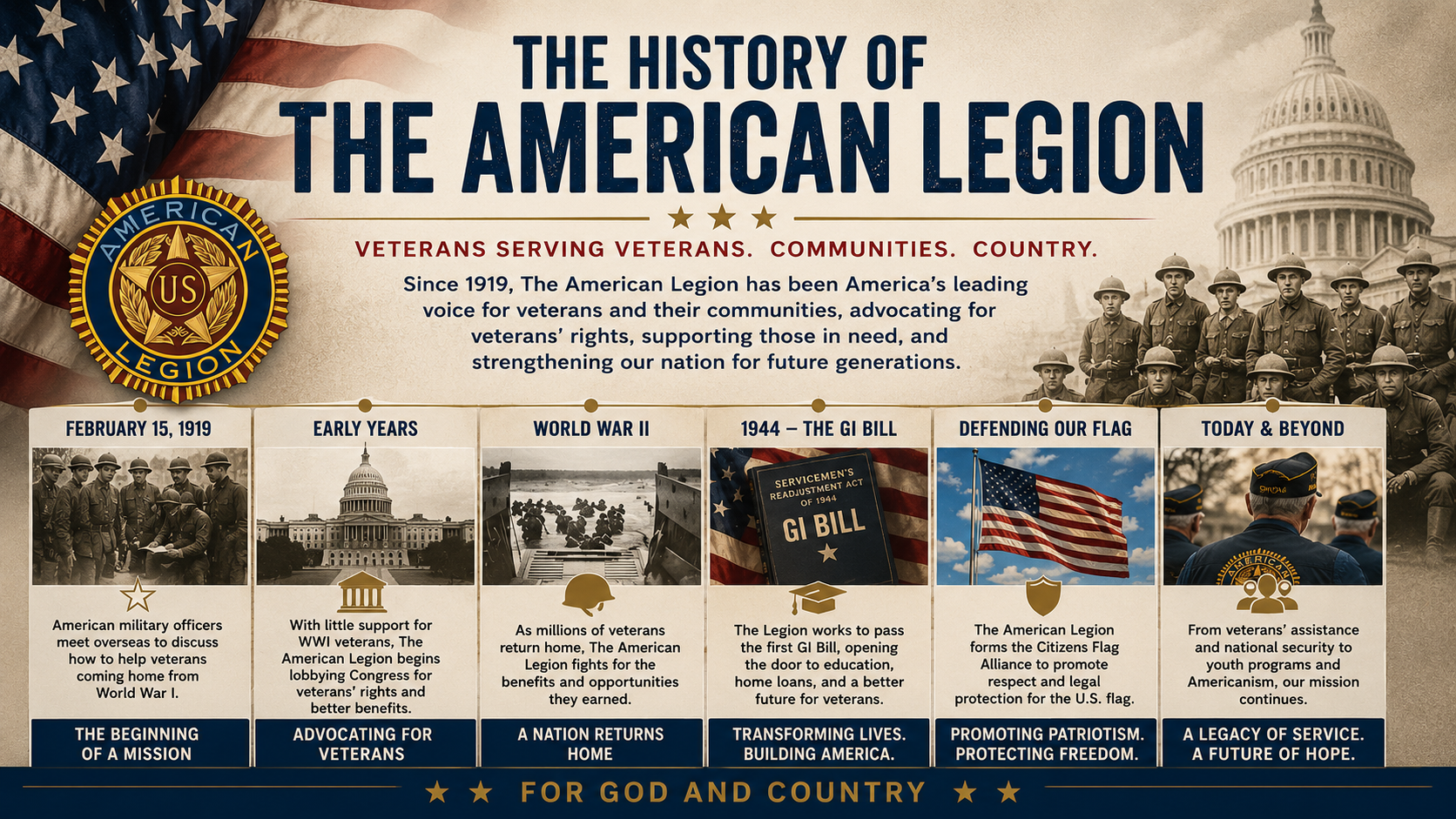
In February 1919, while World War I was coming to a close, American military officers gathered to discuss an important question: How could the nation better care for the men and women returning from war?
At the time, veterans had very little support waiting for them. Many returning service members received little more than a train ticket home and a modest payment before being expected to rebuild their lives on their own. There were no comprehensive educational benefits, housing assistance, or healthcare systems designed specifically for veterans.
Recognizing this need, the founders of The American Legion established an organization dedicated to ensuring veterans would never have to face those challenges alone again.
Fighting for Veterans on Capitol Hill
From its earliest days, The American Legion understood that supporting veterans required more than goodwill—it required action.
The organization quickly became one of the strongest advocates for veterans' rights in Washington, D.C., working directly with Congress to improve benefits and services for those who had served.
As membership grew, so did the Legion's influence. What began as an organization focused on World War I veterans evolved into a powerful voice representing generations of military service members.
The Legion's advocacy helped shape policies that continue to impact veterans and their families today.
The GI Bill: One of America's Greatest Investments
Perhaps no accomplishment better demonstrates The American Legion's impact than its role in creating the original GI Bill.
Following World War II, millions of service members returned home facing many of the same uncertainties that confronted veterans after World War I. They needed opportunities to pursue education, buy homes, find meaningful employment, and successfully transition back into civilian life.
The American Legion recognized these needs and worked tirelessly to develop legislation that would become the Servicemen's Readjustment Act of 1944—better known as the GI Bill.
The GI Bill transformed American society. It opened the doors of higher education to millions of veterans, helped families achieve homeownership, strengthened the nation's workforce, and contributed significantly to the growth of America's middle class.
Its impact continues to be felt today through modern veterans' education benefits that help today's service members pursue their goals after military service.
Standing Up for American Values
The Legion's mission has always extended beyond veterans' benefits alone.
Throughout its history, the organization has promoted patriotism, civic responsibility, and respect for the symbols that unite our nation.
One example is the creation of the Citizens Flag Alliance, an initiative dedicated to promoting legal protection and respect for the American flag. For Legionnaires, the flag represents the sacrifices of those who defended it and serves as a visible reminder of the freedoms Americans enjoy.
The organization has consistently encouraged Americans to understand not only the symbolism of the flag but also the responsibilities that come with citizenship.
Supporting Veterans for Life
Military service doesn't end when someone removes the uniform.
The transition back to civilian life often brings challenges that many Americans never fully see or understand. Physical injuries, emotional wounds, career changes, and family adjustments can make the journey difficult for even the strongest veterans.
The American Legion has long recognized these realities. Through veterans' assistance programs, rehabilitation efforts, advocacy, and local post support, the organization works to ensure veterans never have to face those struggles alone. Whether helping a veteran navigate benefits, connecting them with resources, or simply providing fellowship, Legionnaires continue serving one another long after active duty ends.
Investing in America's Future
While The American Legion is rooted in service to veterans, its vision has always included future generations.
Programs such as Boys State, American Legion Baseball, scholarship initiatives, youth mentoring, and civic education have helped prepare millions of young Americans for lives of leadership and public service.
By investing in young people, the Legion strengthens communities while preserving the principles of patriotism, responsibility, and citizenship that have guided the organization since its founding.
A Legacy That Continues
More than 100 years after its founding, The American Legion remains committed to the same mission that inspired its earliest members: serving veterans, strengthening communities, and defending the values upon which America was built.
Its accomplishments—from advocating for veterans' benefits and helping create the GI Bill to promoting Americanism and supporting youth—have touched countless lives across the nation.
The American Legion's greatest legacy isn't simply found in legislation or historical milestones. It's found in the millions of veterans, families, and communities whose lives have been improved through the continued service of Legionnaires.
For those who wear the Legion cap today, they become part of a tradition that began in 1919 and continues to remind America that service doesn't end when military service is over—it simply takes on a new mission.